Honouring our Heritage and Preparing for the Future
Tuesday 23rd June 2026Restoring a Cathedral: The Work and Craftsmanship Behind the Transformation
In July, Salford Cathedral will reopen its doors following a three-year programme of restoration, renewal and refurbishment that has transformed the cathedral.
The Work Undertaken
This project combined large-scale structural repairs with careful heritage conservation and sensitive liturgical renewal.
Major Structural Repairs
Extensive work was undertaken to stabilise and protect the building:
• Complete roof repair, including new coverings, flashings, ridge tiles, and drainage systems
• Installation of full roof insulation to improve thermal performance
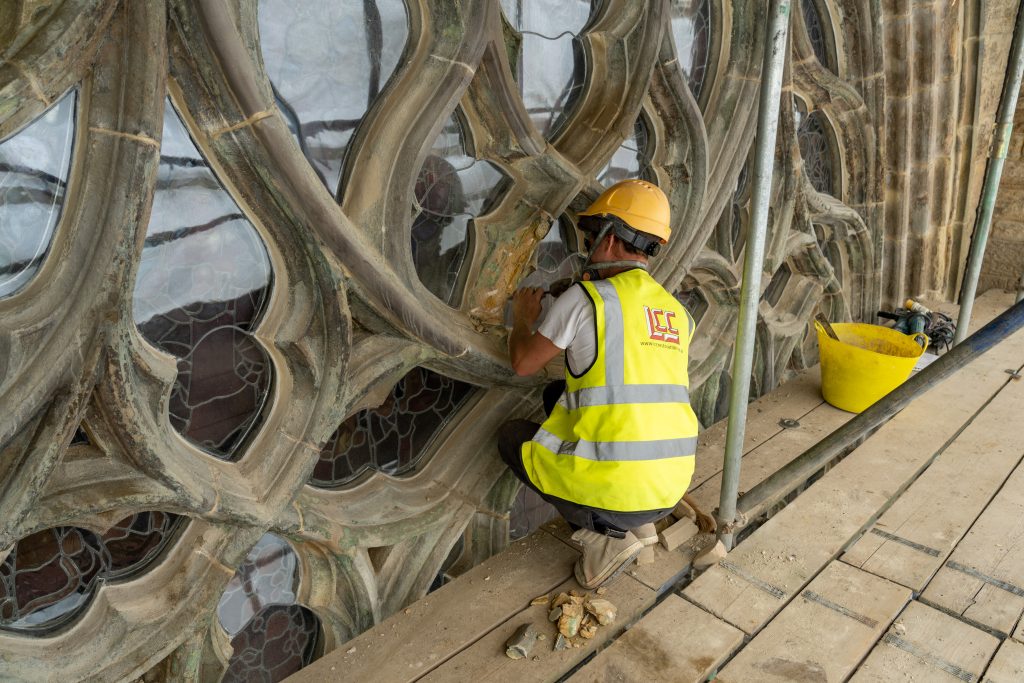
• Repair of failing masonry across the building, including detailed stonework such as gargoyles and decorative features
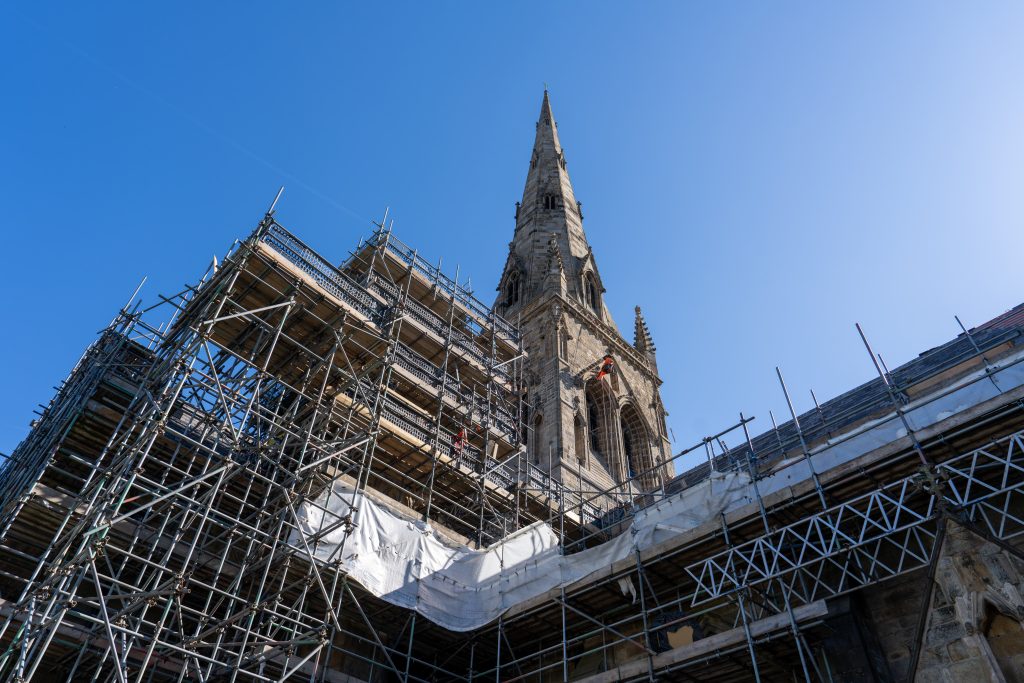
• Major restoration of the spire, including structural repairs and new pinnacles
These works have ensured the Cathedral is once again watertight, structurally sound, and protected for the long term.
Conservation and Heritage Restoration
Alongside repairs, specialist teams restored the Cathedral’s historic character:
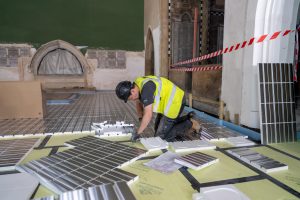
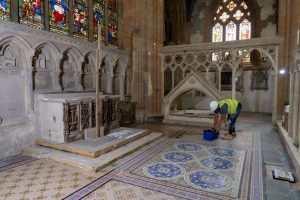
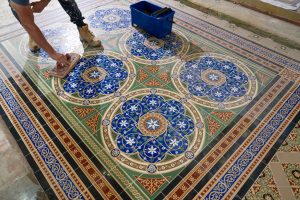
• Cleaning and conservation of internal stonework and surfaces
• Replastering and redecoration throughout the interior, inspired by original Victorian schemes
• Restoration of all stained glass windows, with the addition of secondary glazing to protect them
• Careful restoration of statues and decorative elements to their original appearance
This work has brought back much of the Cathedral’s original beauty while respecting its Grade II listed status and Gothic Revival design.
Liturgical Renewal and Reordering
The project also reshaped the Cathedral’s internal layout to better support worship:
• Repositioning of the altar to reflect the original Latin cross design and strengthen the relationship between sanctuary and congregation
• Reinstatement of chapel features, including screens within the Blessed Sacrament Chapel
• Creation of a new Chapel of Initiation, including a font for baptisms
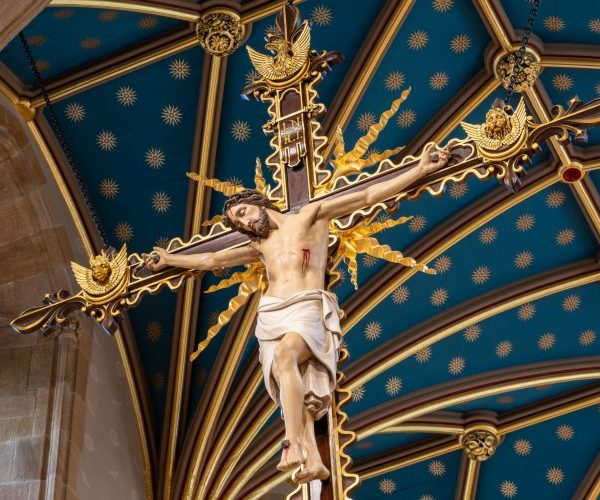
• Reintroduction of significant devotional features, the reinstatement of the rood cross set above the entrance to the chancel
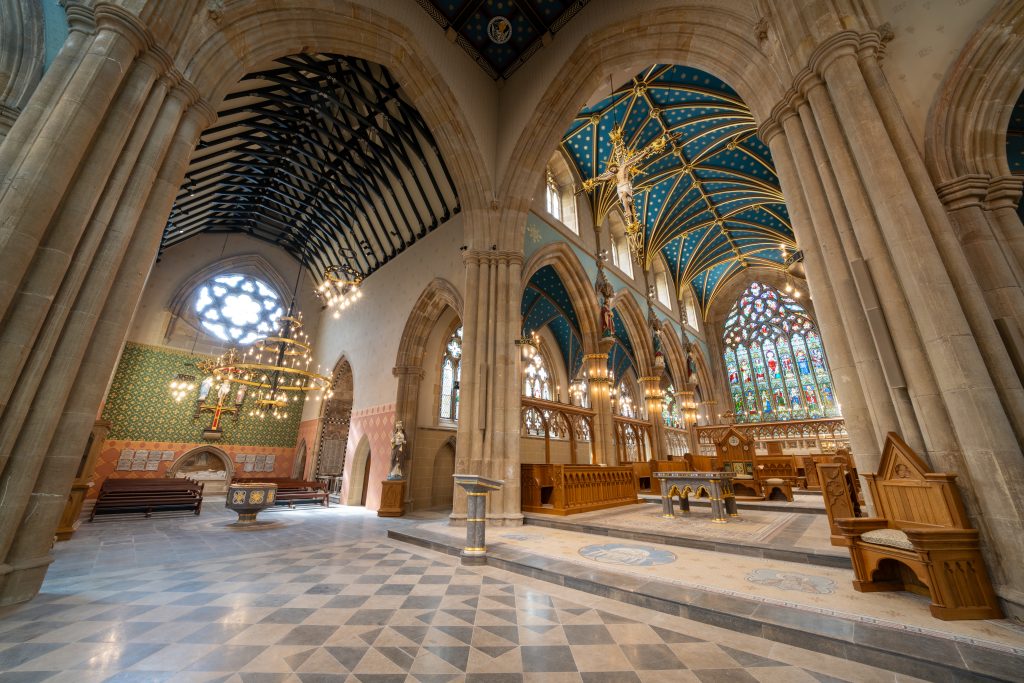
These changes restore the Cathedral’s liturgical coherence and enhance the experience of prayer and worship.
New Facilities and Visitor Spaces
To better serve the community and visitors, several new spaces have been created:
• A new glass entrance opening onto Chapel Street, offering a place of pause and reflection in the city
• Improved seating layout and increased capacity to support large diocesan gatherings
• New visitor facilities, including a bookshop and exhibition space
• Creation of a dedicated treasury to house the Cathedral’s historic relic collection
Sustainability Improvements
The restoration has significantly improved the Cathedral’s environmental performance:
• Insulated floor slab and installation of underfloor heating linked to a ground source heat pump
• Secondary glazing to improve energy efficiency while protecting historic glass
Further sustainability work will continue as part of a long-term commitment to caring for the building and for creation.
The Treasury and the Salford Collection
A newly created treasury that will open in Autumn 2026 will house part of the Cathedral’s historic relic collection. We believe to be one of the largest in the UK. Donated in the 19th century, these relics form an important part of the Cathedral’s spiritual and historic heritage.
Displayed on a rotating basis, they offer visitors opportunities for reflection, pilgrimage, and prayer.
More to come on this as we move into the autumn!
Facts & Figures From Renovation
As we’ve seen the finishing touches made to our Cathedral this year, we have been taking stock of all that has gone into its restoration – from the number of hours worked by dedicated craftsmen to the tonnes of construction materials recycled.
Interior Decoration
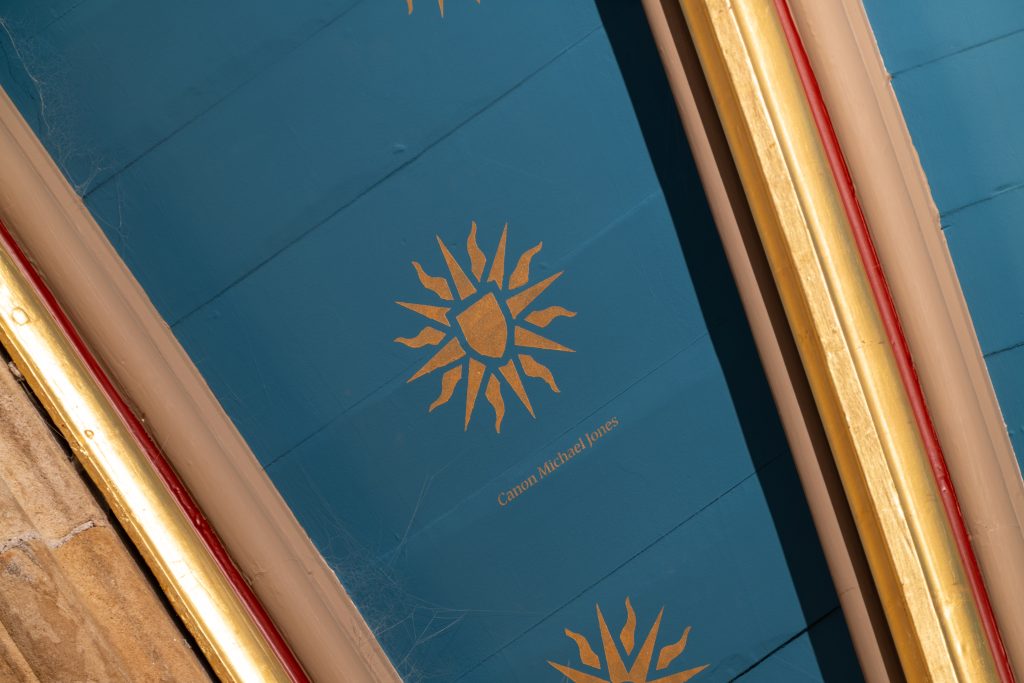
There are a total of 2,344 stars and symbols painted around the cathedral, with two of the stars having been designed specifically for Bishop John and Canon Michael Jones, respectively. The distinctive gold finish has been achieved by using a combination of gold leaf and gold paint, which were supplied by a local company.
Some of the original stencilling has been reinstated throughout the cathedral, for example on the Bishop’s Tree elevation. These striking interior details have been the work of specialist decorators Bernard Watson.

Construction Works
Over the course of the past three years, on site contractors Simpsons of York have used 28,800 scaffolding boards, and around 283 miles worth of tubes. They have also inducted 683 people to the job, and have recruited over 50% of the workforce from the Salford and Greater Manchester area.
In addition to this, Simpsons have recycled 215 tonnes of construction materials – around 98.6%.