
Peace with Creation: A Message of Jubilee
Saturday 30th August 2025This September, we begin a month-long period of reflection, prayer, and practical action as we mark the Season of Creation.
The Season of Creation is an annual campaign that runs from 1st September to 4th October, uniting Christians around the world in reflecting on our call to be responsible and loving stewards of God’s creation.
This year, the theme is “Peace in Creation”, inviting Christians to consider our relationship with the earth and how we can exist in harmony with God’s creation.
Our Season of Creation this year also coincides with our Jubilee for the Environment, inviting us to seek renewal and restoration in our relationship with our common home, our brothers and sisters around the world, and Creator God.
As we begin this important time of reflection, we take a moment to go back to the basics of the Jubilee to better understand how caring for our common home is central to this celebration and our Christian faith in general.
What is a Jubilee?
The concept of Jubilee dates back to the earliest days of Judeo-Christian tradition. Introduced in the Book of Leviticus, this age-old celebration invited the people to re-establish proper relationship with God, with one another, and with all of creation. It involves the forgiveness of debts, the return of misappropriated land, and a fallow period for the fields.
Today, the modern Church celebrates this Holy Year of Jubilee just once every 25 years, offering the faithful a chance to return to these traditional tenets of our faith and to restore our relationship with God and the world around us.
But what role does caring for creation play in this great tradition? And what does it reveal to us about the importance of the environment in our everyday faith?
Healing
To find the answers to these questions, we go back to scripture and the Book of Leviticus, where we read a long list of rules in Chapter 25 which says: “For six years, sow your fields, and for six years prune your vineyards and gather their crops. But in the seventh year, the land is to have a year of sabbath rest, a sabbath to the Lord” (Leviticus 25:3-5).
In this seventh year, scripture calls the people of God not to sow fields or prune vineyards, for “the land is to have a year of rest” (Lev 25:5). This pattern of seven years is to be repeated on a seven-year cycle, adding up to the 49th year, with the great Year of Jubilee taking place in that 50th year – the ultimate year of rest and reset for the land, demonstrating that creation itself has a share in the Jubilee message of redemption and restoration.
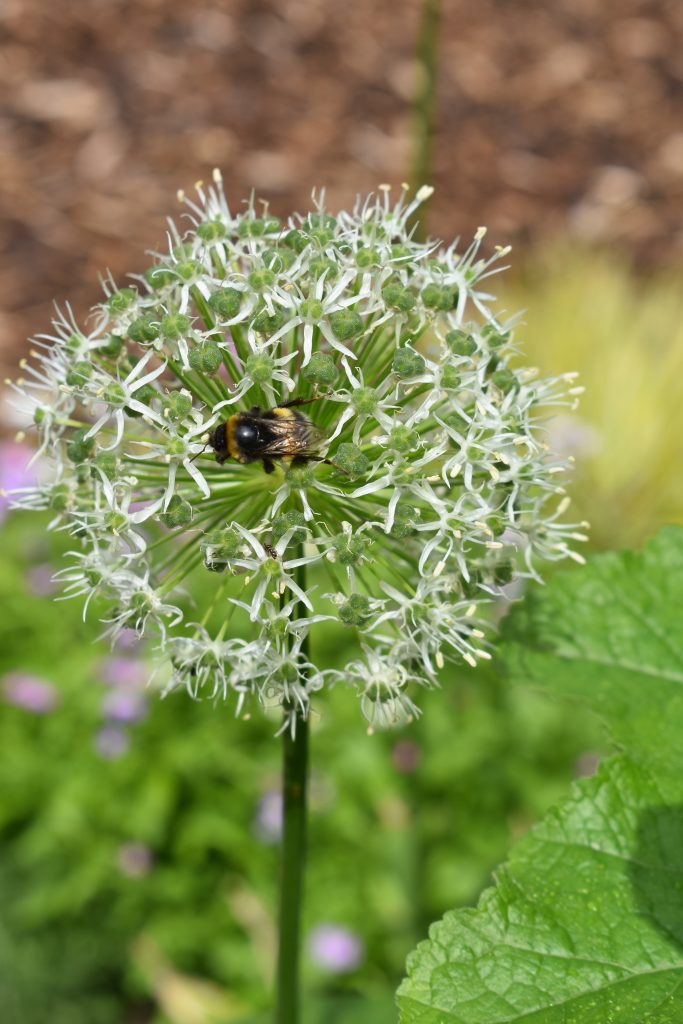
Practically, this also gives a very clear message about our relationship with the land and creation. It reminds us of the goodness and bounty it produces for our benefit whilst also warning us of the impact our working of the land has on creation itself.
In today’s world, we’ve moved far beyond the sowing of fields and pruning of vineyards. In what other ways do our lifestyles impact the world around us? How do our actions and behaviours impact the land, oceans, and atmosphere of our planet, and the wildlife that depends on it? Do we today give the land time and opportunity to heal and reset?
As we mark the Jubilee for the Environment this month, we are invited to reflect on this passage from Leviticus, to consider what God was asking of His people at that time and how His words challenge us to help heal the world around us today.
Stewardship
When we think of creation in terms of our faith, our thoughts often take us back to the Book of Genesis and the story of creation. The very first line of our faith story tells us all we need to know about our call to care for creation, with the words: “In the beginning, God created the heavens and the earth” (Genesis 1:1). With this very simple opening, God asserts that the universe in its entirety was created – out of love – by Him and entrusted, as we discover later in the chapter, to humanity.
Once again, the reality of this is brought to light in the Book of Leviticus in connection to this Holy Year of Jubilee. In Chapter 25 verse 23, we read: “the land is mine“, sending a powerful and stark reminder of humanity’s role in the creation story, as caretakers to a world that belongs to God Himself.
The festival of Jubilee invites us to reflect on this task God set out for us: to be stewards of creation, to care for it and nurture it, helping it to flourish and reach its fullest potential. Never owners or possessors, but an integrated part of one creation that will be redeemed by Christ – the ultimate Jubilee.
Our care for creation in today’s world foreshadows the “new creation” described in Chapter 21 of Revelation: “Then I saw a new heaven and a new earth” (Rev 21:1).
Not only do our actions protect the planet of today, they are a sign of our future relationship with creation – a creation “groaning” (Romans 8:22) in anticipation for a world “made new” (Rev 21:5) by Christ.
Social and Environmental Justice
Protection of the land and upholding ecological justice is undoubtedly a core theme established in this text from Leviticus, but entwined within it comes the question of social justice and how our treatment of both land and each other are inextricably linked.
In his environmental encyclical Laudato Si’, the late Pope Francis warns that “we are faced not with two separate crises, one environmental and the other social, but rather with one complex crisis which is both social and environmental.”
Whilst Pope Francis explored this interrelated crisis in the modern age, its existence is not a concept that is new, but is found in this same passage of Leviticus.
Throughout this long passage, we hear of the returning of property and land to original owners, the command to welcome the “foreigner and stranger”, and those who do not have the means to support themselves at that time. It mandates the people of God to lend without interest or profit, to forgive debt, and it proclaims freedom to those trapped in slavery.
By presenting these themes of social and environmental justice side by side, Leviticus highlights to us the same interconnectedness of these two crises, spoken of by Pope Francis; a combined crisis that is driven by a human tendency to exploit each other and the world around us.
But the Year of Jubilee disrupts this pattern, calling us instead to seek a new path of peace and justice, a renewed relationship that is governed by love and service to one another: the command given to us by Jesus before His death and resurrection – the Jubilee of Jubilees.
Peace with Creation
Overall, the message of Leviticus is one of peace, reminding each of us that we are all one part of one creation, each with a God-given dignity and purpose.
Throughout Chapter 25, the words “I am the Lord your God” appears three times, reminding us that all people and all creation are equal and united as one, called to work together as one towards God’s vision of peace, unity, justice for all.
This Jubilee, we invite you to journey with us as we go back to basics to discover our role in that plan, the practical actions we can take to respond to this Jubilee call, and to root ourselves in prayer, asking God to renew our hearts, minds, and strength to begin again.
Resources
This month, we are delighted to share a range of resources to help you discover more ways to care for our common home at home, in your parish, schools or community group. Although these are being shared during this Jubilee for the Environment, they can be taken and explored in your own time and at your own pace.
Click here to find out more.



Tagged | Environment | Hope in the Future | Jubilee 2025 | Jubilee of Jubilees | Pope Francis